






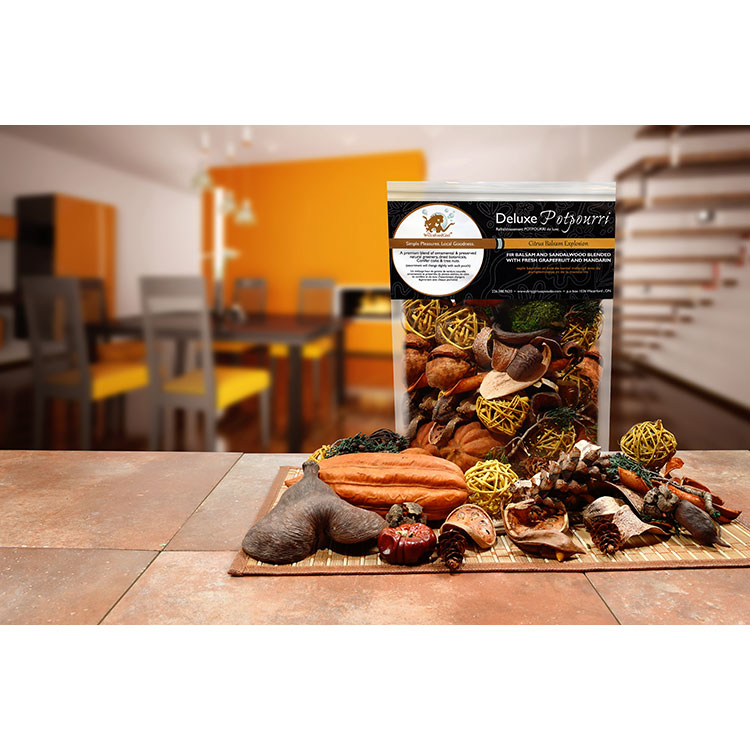
A bowl of decorative potpourri can do more than make a room smell lovely. It can soften a bare console, make a guest bathroom feel considered, or give a bedside table that little bit of romance usually reserved for boutique hotel rooms. The best decorative potpourri ideas begin with a simple question: what feeling should greet someone when they enter this space?
A bright citrus blend feels crisp and sunny near the kitchen. Rose petals, curled botanical shavings, and soft woods bring a more intimate mood to a bedroom. In an entryway, choose something welcoming but not too sweet. Potpourri is a small detail, but scent travels, and a beautiful blend lets the whole room feel dressed.
Start with the right vessel
Before choosing fragrance notes or petals, consider where the potpourri will live. The vessel does much of the visual work. A wide, low bowl shows off texture and color beautifully, while a lidded glass apothecary jar keeps the display tidy in a small space. For an everyday home accent, choose a vessel that feels like it belongs in the room rather than one that competes with every other lovely thing on the shelf.
A footed ceramic bowl adds old-fashioned charm to a dining room sideboard. A clear glass compote makes dried orange slices, lotus pods, and curled bark feel almost jewel-like. A hand-thrown stoneware dish is especially handsome with warm, natural blends in oatmeal, rust, olive, and cream.
If the room is already full of pattern, keep the bowl simple and let the botanicals provide the interest. In a quiet, neutral room, a colored glass vessel or a scalloped dish can give your potpourri a more intentional, collected look.
Decorative potpourri ideas by room
1. Make an entryway feel warmly welcoming
Place a generous bowl of potpourri on an entry table, beneath a mirror, or beside a small lamp. This is a good spot for grounded, universally appealing fragrance families: citrus and cedar, bergamot and amber, or a soft blend of vanilla, sandalwood, and dried petals. Avoid a fragrance that is too heavy or powdery near the front door. The goal is a gracious hello, not a scent cloud that arrives before the guest does.
Tuck a few whole dried orange slices or cinnamon sticks into the blend for visual warmth. In autumn and winter, richer amber, clove, and wood notes feel right at home. During spring, switch to lemon peel, pale petals, and fresh green notes.
2. Give the powder room its own little ritual
A small bowl of potpourri on a tray can make a guest bathroom feel finished. Pair it with a pretty hand soap, a neatly folded guest towel, and a tiny bud vase if there is room. Choose fresh, clean fragrance notes such as eucalyptus, lavender, mint, linen, or bright citrus.
Keep the bowl modest in size. Bathrooms are often smaller, and fragrance can become overwhelming quickly. A few delicate petals and botanical curls in a lidded jar or shallow dish are plenty. If splashes are likely, place the potpourri away from the sink or choose a vessel with a lid.
3. Add softness to a bedroom dresser
A bedroom calls for a quieter sort of scent. Think rose, lavender, cashmere woods, vanilla bean, or a gentle floral with a creamy finish. Arrange potpourri in a vintage-style dish beside a jewelry box, a candle, or a framed photograph for a personal little tableau.
For a more polished look, stay within one color family. Blush petals, ivory pods, and pale wood shavings feel romantic without becoming fussy. A deeper blend of burgundy botanicals, mahogany-toned bark, and dried berries brings a cozier, more dramatic mood during colder months.
4. Style a coffee table without crowding it
Coffee-table potpourri works best when it feels edited. Use one shallow, substantial bowl rather than scattering little dishes around the room. Choose botanicals with interesting scale – large dried citrus wheels, sculptural seed pods, curled shavings, and a few petals – so the arrangement reads as decor from across the room.
Here, fragrance matters just as much as appearance. If you entertain often, choose a refined scent that sits close to the skin of the room: soft woods, white tea, warm amber, or a restrained citrus. Very spicy blends can compete with food and wine, so save those for an entryway or a cozy reading nook.
5. Create a kitchen accent with citrus and herbs
The kitchen is a natural home for cheerful, food-adjacent fragrance, but resist blends that smell like dessert unless that is truly your style. Dried lemon and orange slices, bay leaves, cinnamon bark, rosemary, and subtle clove make a charming display on a counter or open shelf.
Keep it well away from the stove and food-prep surfaces. Potpourri is decorative, not edible, and essential-oil fragrance should never be treated as a culinary ingredient. A small ceramic bowl near a window or coffee station is enough to give the room a fresh, sunny lift.
6. Dress a bedside table or reading corner
A petite dish of potpourri beside a reading chair can make a quiet corner feel deliciously intentional. Choose comforting notes that invite a slower evening: lavender and cedar, chamomile and vanilla, or rose with a whisper of sandalwood.
This is also a lovely place to use a sachet instead of an open bowl. Tuck one into a basket with a throw blanket, or nestle it beside books on a shelf. The fragrance will be gentler, and the styling remains beautifully understated.
Use color like a florist would
The most memorable potpourri displays have contrast. Too many small, similarly colored pieces can look dusty or flat, even when the fragrance is gorgeous. Build visual interest with a mix of airy petals, sturdy seed pods, curled bark, dried fruit, and a few larger statement botanicals.
For a romantic palette, combine faded rose, plum, cream, and warm brown. For a clean, coastal feeling, try pale sand, white petals, soft green, and weathered wood. Holiday potpourri can be elegant rather than overly themed when it leans on deep red berries, pinecones, orange, and natural cinnamon instead of glittery additions.
There is one useful trade-off to remember: the more delicate and pale the ingredients, the more easily they show dust and fading. High-traffic rooms may suit richer colors and sturdier botanicals. Save your most delicate petal-forward blend for a protected dresser, shelf, or guest room.
Refresh fragrance without losing the look
Even a premium potpourri blend eventually needs a little encouragement. Set the bowl away from direct sunlight, radiators, and damp areas, all of which can fade both color and fragrance. Give the mixture a gentle toss every week or two to move the more fragrant pieces to the surface.
When the scent begins to soften, refresh it with a few drops of fragrance oil made for potpourri. Add the oil slowly, beginning with a small amount, then let the blend rest before deciding whether it needs more. Pouring oil directly onto pale petals may cause dark spots, so aim for bark, pods, or wood shavings and mix thoroughly.
If your blend has been displayed for a long time, consider removing faded or dusty pieces and adding fresh botanicals rather than replacing everything. This keeps the arrangement looking lush while letting you preserve the ingredients you love most.
Make a gift that feels personal
Potpourri becomes a particularly thoughtful gift when it is paired with a beautiful vessel. A small ceramic bowl filled with a fragrant blend, wrapped with ribbon, feels like a housewarming present with real personality. For a hostess gift, choose a blend that complements the season and include a simple note about where to display it.
It also pairs beautifully with a hand-poured soy candle, a room spray, or a bar of artisan soap in a coordinating scent family. The result is not just a gift, but a tiny home ritual – one that says, with a wink, make some lovely dirty plans for your space.
Keep petpourri out of reach of curious children and pets, especially if the blend contains essential oils, berries, or small decorative pieces. Then let it do its quiet work: catching the light, carrying a favorite scent, and making an ordinary corner feel like it was chosen with care.